There are many investment opportunities in the nursing home sector, but most investors often do not fully understand the nature of the product being sold.
 Real Estate Law
Sep 28, 2026
Law firm founded 10 years ago · 30,000 clients represented • Paris • Marseille • Les Gets
There are many investment opportunities in the nursing home sector, but most investors often do not fully understand the nature of the product being sold.
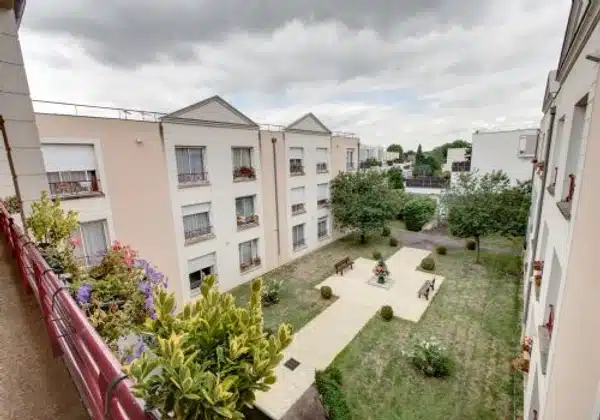
A nursing home in Evry (91).
In the tax-exemption investment market, investors will find numerous products that allow them to purchase units in residential care facilities for the elderly, or more commonly known as EHPADs.
However, experience shows that investors are very rarely properly informed about the reality of what they are buying—namely, a unit in a building temporarily designated as an EHPAD, rather than a unit in an EHPAD itself.
Literally, the difference seems minor; legally and practically, it is enormous.
In fact, few investors keep in mind that an EHPAD, much more than a building, is first and foremost an administrative authorization to operate a certain number of “beds” issued by the Regional Health Agency (ARS).
Without the ARS’s approval, no building can be operated as a nursing home, especially since this administrative authorization is tied not to the building itself, but to the operator.
This has several serious consequences that investors almost always overlook.
“The investment is far riskier than what is traditionally presented by the marketers of these types of products.”
Among them is the fact that the operator may decide to relocate its operations to another building, leaving investor-co-owners in an extremely difficult situation—namely, having to find a new use for a building designed to house a nursing home operation, which will no longer be possible in the future. Except in the very specific and rare case of a building abandoned by a nursing home operator that is of no interest to another operator and is therefore never intended to become a nursing home again. This is especially true since the Regional Health Agency (ARS), which authorized the transfer, will certainly not approve a new operation of the same type on the premises, since the need has already been met elsewhere within the same geographic area.
In conclusion, investors in nursing homes must be fully aware that they are not purchasing a unit within a nursing home, but rather in a building (temporarily) designated as a nursing home—which means that sooner or later the building’s designated use will have to be changed.
In this case, it will be necessary to seek to limit the loss, since the value of a building operated as a nursing home and that of the same building without such operation differ significantly from one another.
The issue is therefore clearly more complicated, and the investment far riskier than what is traditionally presented by the marketers of these types of products.
The reality is, in fact, quite far removed from the classic sales pitch—as simplistic as it is misleading—reported by many clients, which consists of highlighting the aging of the French population and the argument that there will always be, and indeed an increasing need for, nursing homes.
Coming up: Investing in EHPADs: What Should Landlords Fear at the End of the Lease?